


Keeping You Safe
Protecting our patients is the top priority at Cooper University Health Care.
Participating in Your Own Care
Cooper will take every precaution to prevent medical errors. As part of our prevention efforts, we will continually check your identity and ask you about your care. We also encourage you to be a participant in your care.
Research shows that patients who are more involved in their care tend to get better results. Some ideas include:
- Speak up if you have questions or concerns or don’t understand what you are being told.
- Pay attention to the care you are receiving to make sure you are getting the right treatments and medications by the right health care professionals.
- Educate yourself about your diagnosis, the medical tests you are having, and your treatment plan.
- Ask a trusted family member or friend to be your advocate by assisting you in filling out forms and communicating your health care wishes.
- Know what medications you take and why you take them.
- Participate in all your decisions about your treatment. You are the center of the health care team.
Calling Your Nurse
Near your pillow, you will find a call button that signals the nursing station for assistance. A nurse will either come to your room or respond to your call through the intercom system above your bed. If you feel weak, please call your nurse before attempting to get out of bed. When the side rails on your bed are raised for your protection, do not attempt to get out of bed without the assistance of a nurse. If you feel weak while in the bathroom, push the emergency signal button to call for assistance.
As a patient, you play a vital part in preventing infections during your hospital stay. Below are some of the most common types of hospital-acquired infections and what you can do to reduce your risk.
Consent Forms
Consent forms are your agreement to let our staff treat you; they are signed by all patients at the time of admission. A parent or guardian must sign for minors or those unable to sign for themselves. Other consent forms, signed at the time of admission, concern insurance coverage. Additional forms may be required for special procedures during hospitalization. Your physician will discuss these with you.
Identification Band
For your protection, we ask that you wear an ID band at all times until you are discharged. If the information on the band is wrong, or if the band should fall off or be removed for any reason, please be sure to tell your nurse.
Fire and Disaster Drills
State regulations require that hospitals conduct periodic fire and disaster drills. Do not be disturbed if you see or hear a practice drill in progress. You will receive instructions from hospital personnel in the event of an actual emergency.
Infection Prevention
Hospital-acquired infections are infections that develop during the course of a patient's hospitalization. They may develop because the patient’s medical condition makes them susceptible to infections; because they had a surgical procedure; because they have a catheter in their urinary tract, nose, mouth or blood vessels; or because they have aspirated (inhaled) material from the nose or mouth into the lungs. Some of these infections can be prevented by utilizing best practices.
Hands may look clean, but germs are always lurking. Hand washing is one of the most effective ways to prevent the spread of infection and is the professional responsibility of all health care workers. When you are at Cooper, feel free to ask our staff if they have sanitized their hands with soap and water or alcohol gel before touching you. Also, remember to wash your own hands to prevent the spread of harmful germs.
- Before preparing or eating food.
- Before touching your eyes, nose, or mouth.
- Before and after changing wound dressings or bandages.
- After using the bathroom.
- After blowing your nose, coughing, or sneezing.
- After touching hospital surfaces such as bed rails, bedside tables, doorknobs, remote controls, or the phone.
According to the Centers for Disease Control and Prevention (CDC), you should wash your hands:
1. Wet your hands with clean running water.
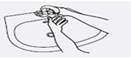
2. Apply enough soap to cover both hands.
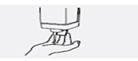
3. Rub your hands palm to palm.
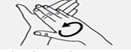
4. Rub your right palm over the back of your left hand with your fingers interlaced. Then repeat this by rubbing your left palm over the back of your right hand.
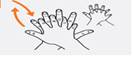
5. Rub your palms together with your fingers interlaced.

6. Clean the back of your fingers by rubbing them into the opposite hand with your fingers interlocked.
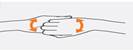
7. Clean all the way around your thumbs by clasping your left thumb with your right palm and repeating the same motion with your right thumb in your left palm.
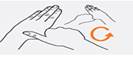
8. Remember your finger tips! Rub the tips of your left fingers in the palm of your open right hand. Repeat with the tips of your right fingers in the palm of your open left hand.
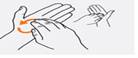
9. Rinse hands thoroughly under stream of water.
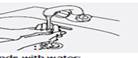
10. Dry hands thoroughly with paper towel to avoid spreading germs back to your hands.
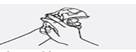
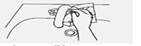
11. Use towel to turn off faucet.
For more information from the CDC, including tips and videos on hand hygiene, click here.
After your surgery or procedure, you may need one or several medical devices, such as a Foley catheter, a central line, or a ventilator. The use of any of these devices increases your risk of developing an infection. However, there are several things to keep in mind to help prevent this from happening, which are explained below.
- Always wash your hands with soap and water or an alcohol-based rub or sanitizer before and after doing catheter care.
- Always keep your urine bag below the level of your bladder.
- Do not tug or pull on the catheter tubing.
- Do not twist or kink the catheter tubing.
- Ask your health care provider daily when it can be removed.
- Ask your health care providers to explain why and how long you will need a central line.
- Make sure all health care providers wash their hands with soap and water or an alcohol-based rub or sanitizer before and after performing central line care.
- If the dressing comes off or becomes soiled, tell your nurse or doctor immediately.
- Do not touch or let any visitors touch the tube.
- Wash your hands often with soap and water or an alcohol-based rub or sanitizer.
- Remind visitors to wash their hands with soap and water or alcohol-based rub or sanitizer before and after each visit.
- If you smoke, quit. Patients who smoke get more infections. If you know ahead of surgery that you will need to be on a ventilator, talk to your doctor about helpful treatments and resources for smoking cessation.
- Advise family members to ask the nursing staff about raising the head of the bed (semi-recumbent position) and performing regular oral hygiene to prevent bacteria from traveling down the ventilator tube to the lungs.
- Advise family members to ask the nurse or respiratory therapist when the patient will be allowed to try breathing on his or her own.
- Advise family members to remind any health care provider to wash their hands with soap and water or an alcohol-based rub or sanitizer before touching the patient.
- Do not shave the surgical area. Shaving can irritate the skin,making it more vulnerable for an infection.
- Ask about taking antibiotic medication prior to surgery.
- Speak up if someone tries to shave the area with a razor before surgery. Hair should only be removed if it will interfere with the procedure. If necessary, hair should be removed withclippers.
- Remind all health care providers to wash their hands with soap and water or an alcohol-based rub or sanitizer before touching the surgical site.
- Remind visitors to wash hands with soap and water or an alcohol-based rub or sanitizer before and after each visit. Visitors should also avoid touching the surgical site or dressing.
A urinary catheter is a thin tube placed in the bladder to drain urine into a collection bag. To prevent germs from entering the catheter and traveling into the bladder, remember to:
A central line is a tube that is placed into a large vein, usually in the chest, neck, arm, or groin, to give fluids or medication. To prevent bacteria or germs from entering the central line and into the blood, remember to:
A ventilator is used when a patient is unable to sufficiently breathe on his or her own. Ventilators can be life-saving, but they can also increase a patient’s risk of infection, such as pneumonia, by making it easier for germs to enter the lungs. To help prevent this from occurring, remember the following:
Although infections at the surgical site are uncommon in the hospital, there are preventative measures to remember before and after the procedure.
Before surgery:
After surgery:
Antibiotic Stewardship
If you do develop a bacterial infection, you may receive antibiotics. It is important to take the antibiotics exactly as directed in order to avoid complications or recurrent infection.
If you develop a viral infection, you will not be prescribed antibiotics. Antibiotics are typically not used to treat viruses. Discuss other treatment options with your health care provider.
Surroundings that are unfamiliar to you and the stress related to a hospital stay, along with medication use, can increase your risk for falling.
- Be sure objects you need are within reach – such as the call bell, bedside table, and telephone.
- Use your call button if you need help or feel dizzy, light-headed, or weak. Wait for the nurse to help you.
- Do not try to climb over or put down the side rails of your bed.
- Wear slippers with non-skid soles.
- Do not lean on objects with wheels such as IV poles or your bedside table.
- Call the nurse if a spill occurs on the floor.
- Use assistive devices such as a walker or cane, or the handrails in the bathroom or hallway.
- Patient Lifts are assistive devices that allow patients who have lost or limited mobility to be transferred between their bed, chair, or other resting place. These devices use hydraulic power and straps, slings, or belts to make the transition possible.
- For information about home fall prevention, speak with your nurse or physician.
Cooper University Health Care embraces a culture of Safe Patient Handling. The goal of the Safe Patient Handling program is to protect you and your caregivers when you need repositioning while in bed or when you need assistance with transfer in or out of bed. Your caregiver will continually evaluate your ability to move safely and choose equipment accordingly. As the patient or a family member speaking on behalf of the patient, you have a right to refuse the use of any safe patient handling equipment.
Medical identity theft occurs when someone uses a person’s name or other parts of his/her identity (health insurance information, Social Security Number) to obtain medical services or goods, or when someone uses the person’s identity to obtain money by falsifying claims for medical services and falsifying medical records to support those claims. There are several things you can do to minimize your risk of medical identity theft.
- Do not bring credit cards into the hospital.
- Avoid carrying important documents with you.
- Empty your wallet or purse of unnecessary items.
- Whenever possible, have a family member take care of bills at home; do not bring or leave medical bills in the hospital room.
- Request the hospital to use a medical record number instead of your Social Security number for identification purposes.
- Don’t be afraid to ask questions, such as who will be able to access your information.
- Review every Explanation of Benefits letter you receive from your insurance company. Check to make sure you received the services described.
- Always inform your insurance company of a lost or stolen insurance card.
- If you suspect that you are a victim of medical identity theft, request a copy of your medical records to ensure you are the only person who has been provided service under your name.
- File a police report through your local police department.
- File a medical identity theft complaint with the Federal Trade Commission at www.identitytheft.gov or by calling 1.877.IDTHEFT.